
You've noticed the signs. Curling shingles. Granules in the gutters. A dark stain on the ceiling that keeps growing. You've started searching for best price roofers near me and replace my roof. You're ready to make the call. But before you sign that contract, there are five questions that most homeowners forget to ask – and those questions can mean the difference between a roof that lasts 30 years and a roof that leaks in 5.
This guide isn't about when to replace your roof or how to spot storm chasers. You already know that. Instead, we'll focus on the specific questions that separate a quality contractor from one who cuts corners, and the details hidden in the fine print that cost homeowners thousands.
Part 1: Question #1 – "Who Will Actually Be on My Roof?"
You hire a reputable local roofing company. They have great reviews. They're licensed and insured. But on installation day, a different crew shows up – subcontractors you've never met, hired for the day, with no direct relationship to the company you hired.
Why this matters: Subcontractors are paid by the job, not by the hour. Their incentive is speed, not quality. They're less likely to care about the small details that make a roof last – like proper nailing patterns, correctly placed flashing, and clean seams.
What to ask: "Does your company use its own employees, or do you subcontract? If you subcontract, who supervises them? And am I allowed to meet the crew before they start?"
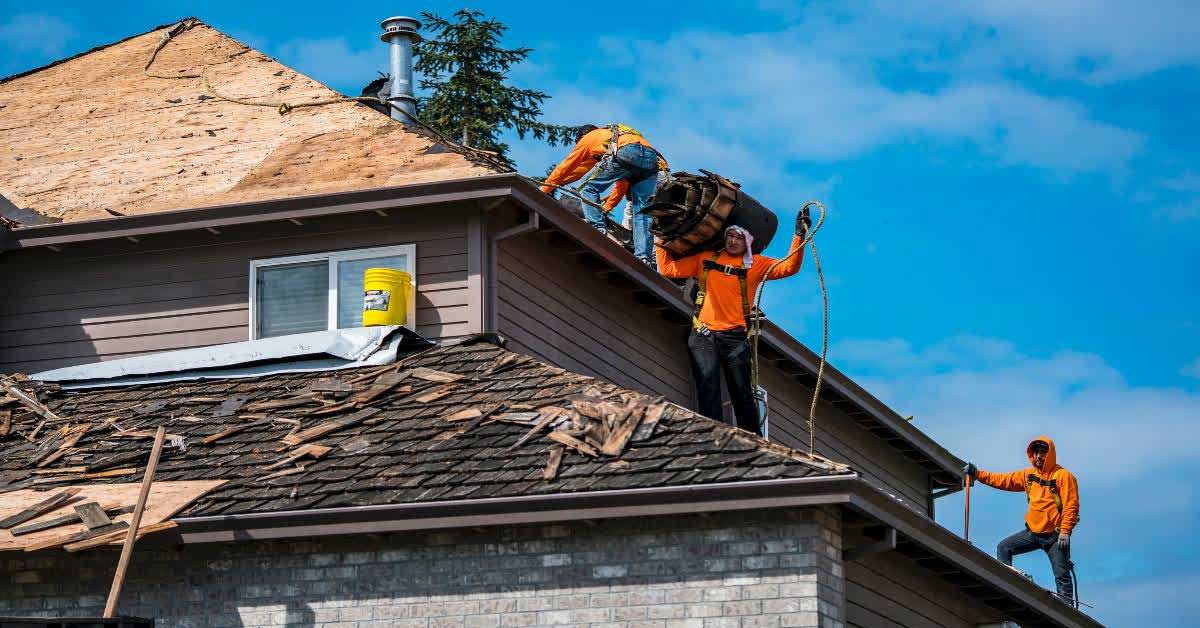
What to look for: Companies that use their own employees will say so proudly. Companies that subcontract will hesitate or say "we use trusted partners." If they subcontract, ask for proof of insurance for the subcontractors (many roofing accidents aren't covered by the main contractor's policy).
| Crew Type | Pros | Cons |
|---|---|---|
| Direct employees | Consistent quality, accountable, trained | Higher cost |
| Subcontractors | Lower cost | Variable quality, less accountability |
Part 2: Question #2 – "What's the Nail Pattern?"
This is the question that roofers hope you never ask. Proper nailing is the single most important factor in how long your roof lasts. Yet most homeowners never ask about it.
The standard: Most shingle manufacturers require 4 nails per shingle (6 in high-wind areas). Nails should be placed in the "nail line" – not too high, not too low. Nails driven too deep can split the shingle. Nails not driven deep enough will pop up over time.
What to ask: "How many nails per shingle do you use? Can I see your nailing pattern before you start?"
What to watch for: If they can't answer immediately, that's a red flag. If they say "industry standard" without giving a number, push for specifics. A quality contractor will show you a sample shingle with the correct nail placement.
Why it matters: A roof with 3 nails per shingle (instead of 4) fails 30-40% faster. On a 25-year roof, that's 7-10 years of life lost.
Part 3: Question #3 – "Where Is the Dumpster Going?"
This seems trivial. It's not. Where the crew places the dumpster determines how much damage your property sustains.
The problem: Heavy dumpsters tear up driveways. They crush sprinkler heads. They kill grass. Roofing crews are focused on the roof, not on protecting your landscaping.
What to ask: "Where will you place the dumpster? Can you put down plywood or boards to protect my driveway? Who pays if my driveway cracks?"
What to look for: A contractor who has a clear answer (specific location, protection plan) is organized. A contractor who says "we'll figure it out when we get there" is not.
Pro tip: Take photos of your driveway, walkways, and landscaping before they arrive. If there's damage, you have proof.
Part 4: Question #4 – "What Happens If It Rains?"
Roofing is weather-dependent. But rain happens. What the contractor does during rain – and before rain – tells you everything about their professionalism.
What to ask: "If rain is forecast, how do you protect my home? If rain starts unexpectedly, what's your emergency procedure? If water gets inside, who pays for the damage?"
What to look for: A quality contractor will have tarps on hand and a clear plan. They'll remove old shingles in sections, not all at once, so the roof deck is never fully exposed. They'll cover the deck with tarps at the end of each day.
The nightmare scenario: A crew tears off your entire roof, then it rains overnight. Water pours into your attic, ruins insulation, stains ceilings, and damages your belongings. The contractor claims it's "an act of nature" and not their responsibility. A good contract assigns responsibility for rain damage to the contractor.
| Weather Plan | Good Contractor | Bad Contractor |
|---|---|---|
| Tear off method | Section by section | Entire roof at once |
| End of day | Tarped and secured | Left exposed |
| Rain forecast | Reschedule or tarp | Work anyway, risk damage |
| Damage responsibility | Contractor pays | Homeowner pays |
Part 5: Question #5 – "What's Not Included in This Quote?"
The price you're quoted is rarely the price you pay. There are almost always add-ons – some legitimate, some not.
Common hidden costs:
Deck repair: Rotted plywood under the shingles. This is legitimate. Old roofs often have water damage. Expect to pay $50-$100 per sheet.
Ventilation upgrades: Code may require more attic vents than you currently have. This is legitimate but should be discussed upfront.
Ice and water shield: Required by code in many areas, but sometimes "forgotten" in the initial quote.
Drip edge: Metal edge along the roof perimeter. Sometimes excluded to make the quote look lower.
Disposal fees: Some quotes exclude dumpster fees, adding $500-$1,000 later.
What to ask: "Can you give me a written list of what's NOT included in this price? What are the most common add-ons your customers end up paying for?"
What to look for: A contractor who is upfront about potential extras is honest. A contractor who says "nothing, this is the final price" is either lying or planning to hit you with change orders later.
| Potential Add-On | Typical Cost | Legitimate? |
|---|---|---|
| Deck repair (per sheet) | $50–$100 | Yes – rotted wood must be replaced |
| Ice and water shield | $500–$1,500 | Yes – required by code in many areas |
| Drip edge | $200–$500 | Yes – required for proper water shedding |
| Additional vents | $200–$400 each | Yes – if code requires more airflow |
| Disposal fees | $500–$1,000 | Yes – but should be in initial quote |
Part 6: The "Storm Chaser" Test – How to Spot the Scam
After a hailstorm, your area is flooded with out-of-state roofers offering "free roofs" paid for by insurance. Some are legitimate. Many are not.
The storm chaser playbook:
They show up within days of a storm (no local reputation)
They offer a "free inspection" that always finds damage
They pressure you to sign a contract before calling your insurance
They offer to "handle everything" with your insurance company (illegal in many states)
They ask you to sign an "assignment of benefits" – giving them the right to collect insurance payments directly
How to protect yourself:
Never sign a contract the same day you meet a roofer
Get multiple estimates (at least 3)
Verify they have a local physical address (not just a P.O. box)
Call your insurance company before signing anything – ask if they work with this roofer
Never sign an assignment of benefits (AOB)
The question to ask: "How long have you had a physical office in this county?" If it's less than 2 years, proceed with extreme caution.
Part 7: The "Warranty" Trap – What Manufacturers Don't Tell You
New shingles come with a warranty. But that warranty is full of conditions that void it – conditions your roofer might not follow.
What voids a shingle warranty:
Improper nailing (wrong pattern, wrong depth)
No ventilation (attic must have proper airflow)
Installation over old shingles (most warranties require complete tear-off)
Unlicensed contractor (manufacturers won't honor warranties from unlicensed installers)
The catch: The manufacturer's warranty covers the shingles (materials), not the labor. If your roof fails in 10 years, you get free shingles – but you pay to install them. That's still thousands of dollars.
What to ask: "Does your company offer a workmanship warranty? How long? What does it cover?" A workmanship warranty covers the labor if the installation fails. Without it, you're on the hook for installation costs even if the shingles are free.
| Warranty Type | Covers | Typical Length |
|---|---|---|
| Manufacturer (materials) | Shingles only | 20-50 years (prorated) |
| Workmanship (labor) | Installation errors | 2-10 years (non-prorated) |
| Enhanced manufacturer | Materials + labor | 10-25 years (requires certified installer) |
Part 8: The "Payment Schedule" Red Flag
How a roofer asks to be paid tells you a lot about their financial stability.
The safe payment schedule:
10-20% deposit (materials)
30-40% when tear-off is complete
30-40% when installation is complete
10% after final inspection and cleanup
The red flag payment schedule:
50% or more upfront
Payment in full before work is complete
Cash only (no check, no credit card)
Pressure to pay before your insurance adjuster has inspected
Why this matters: Roofers who demand large upfront payments are often undercapitalized. They need your money to buy materials for your job – and for their other jobs. If they go out of business (and many do), you lose that money.
What to ask: "What's your standard payment schedule? Can I pay the final portion after I've inspected the completed work?"
Part 9: Commercial Roofing Specifics – What's Different
If you're searching for commercial roofers in my area, the questions change. Commercial roofs are often flat or low-slope, requiring different materials and different questions.
Commercial-specific questions:
"Do you have experience with TPO, EPDM, or modified bitumen?" (flat roof materials)
"Can you work around our business hours?" (weekend or night work)
"Do you provide a warranty on seams?" (seams are the most common failure point on flat roofs)
"How do you handle ponding water?" (standing water kills flat roofs)
Commercial roof cost: Flat roofs are priced per square foot, not per square (100 sq ft). Expect $4-$8 per square foot for TPO or EPDM.
The big difference: Commercial roofs often have penetrations (vents, HVAC units, pipes) that residential roofs don't. Each penetration is a potential leak point. Ask how they'll flash each one.
Part 10: Your Roof Replacement Action Plan
Before getting quotes:
Take photos of your current roof (from ground level)
Note any interior stains or leaks
Check your attic for daylight or moisture
Call your insurance company – ask if storm damage is covered
During quote process (get 3-4 quotes):
Ask each roofer the 5 questions (Parts 1-5)
Get written quotes that list materials, not just prices
Verify license and insurance (call the insurance company, don't just take their card)
Check their physical address (Google Maps to confirm it's real)
Before signing:
Read the workmanship warranty carefully
Confirm the payment schedule (never pay in full upfront)
Get a detailed scope of work (not just "replace roof")
Verify they pull permits (in most areas, this is required)
During installation:
Take photos of your driveway before the dumpster arrives
Ask to see the nailing pattern on the first few shingles
Check that they're using ice and water shield in valleys and eaves
Walk the roof after tear-off (inspect the deck before new shingles go on)
After completion:
Do a final walkthrough with the project manager
Check for loose nails in your yard (use a magnetic sweeper)
Get a copy of the permit (proof the work was inspected)
Register your warranty with the shingle manufacturer

